Ardbeg 10, the bargain at the heart of the cult
Ardbeg has built one of whisky's most devoted followings, with a membership committee, an annual celebration and limited editions that resurface at auction for several times their price. Yet the core Ten, the bottle on which that reputation was built, remains one of the best values in peated whisky: just over fifty euros for a malt our model rates around fifty percent above its shelf price. Whatever brand premium exists across the Ardbeg range, this is one place where it is notably restrained.
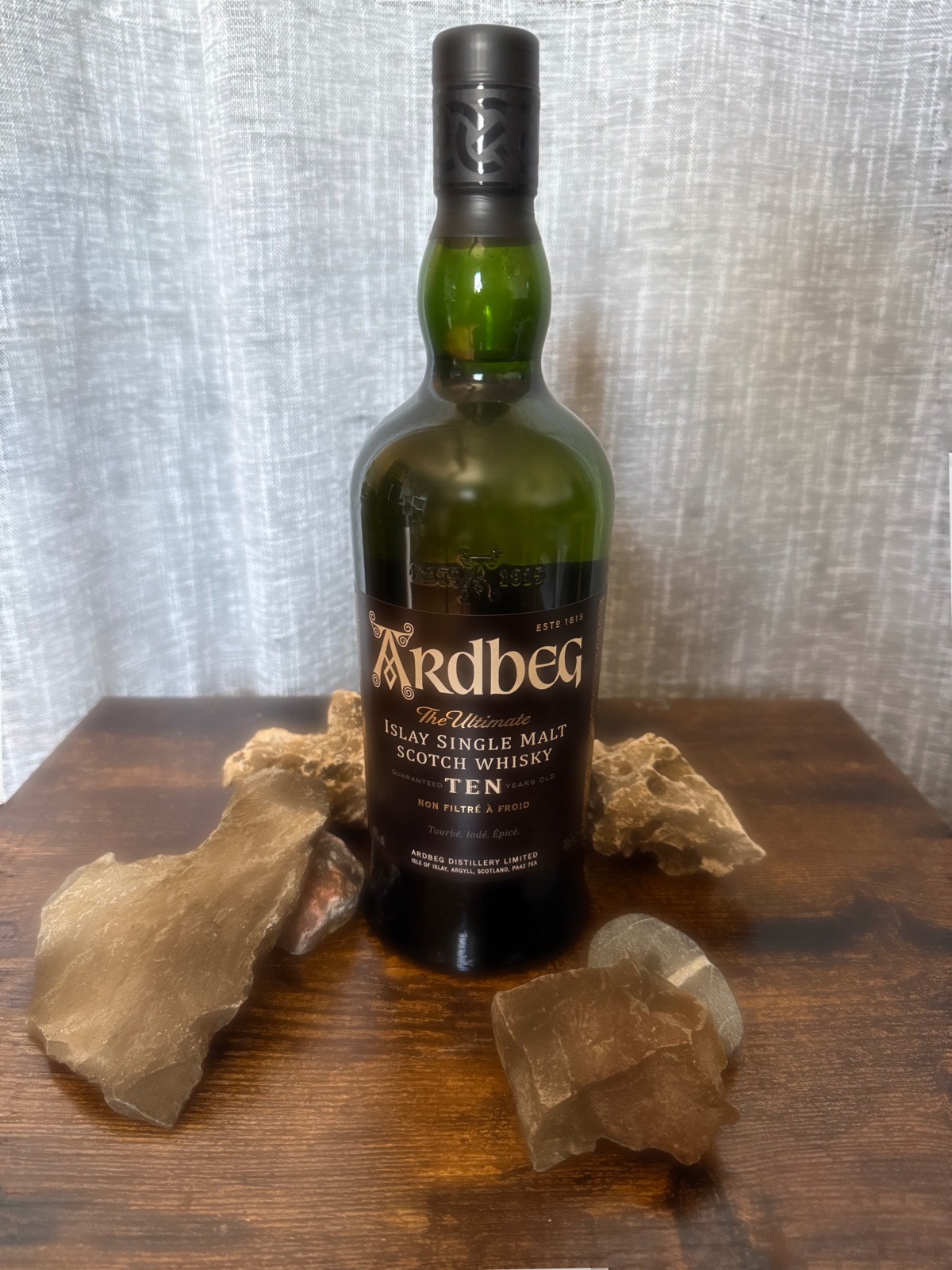
Ardbeg is the Islay that built a following. Where Caol Ila keeps a lower profile, Ardbeg has cultivated one of the whisky world’s most devoted communities: a membership committee, an annual celebration, limited editions that disappear almost as soon as they are released before resurfacing at auction for several times their original price. Few distilleries have created a stronger sense of anticipation around their brand. Yet beneath all that attention sits the Ten, the bottle on which the reputation was built, and quietly one of the best values in peated whisky.
The mythology is genuine. The Ardbeg Committee counts hundreds of thousands of members who receive early access to Committee and Ardbeg Day releases, while sought-after bottlings such as Uigeadail and Corryvreckan occupy the premium end of the range with good reason. Many of the annual special editions, however, derive as much of their appeal from scarcity and collectability as from what is in the glass. Our model reflects that distinction: several command prices driven more by exclusivity than by intrinsic quality. Under the ownership of Moët Hennessy, Ardbeg understands that at the top of its range it is selling an experience and a story as much as a whisky.
The Ten is different. Bottled at 46%, non-chill filtered and free from caramel colouring, it is presented much as peat enthusiasts prefer. The profile is unmistakably Ardbeg: dense smoke, tar and charred wood give way to citrus zest, cracked pepper and a long finish carrying notes of ash, espresso and sea salt. Despite its intensity, it remains remarkably precise rather than heavy-handed. More than twenty years after its introduction, it continues to serve as a benchmark against which many peated malts are judged. Even experienced Islay drinkers rarely seem to be without a bottle.
What makes the Ten particularly interesting is its position in the range. Selling for just over fifty euros in many markets, it scores exceptionally well in our valuation model, which estimates the intrinsic quality of the whisky at roughly fifty percent above its shelf price. A ten-year-old single malt with this level of quality and reputation could reasonably command more. The explanation is straightforward: Ardbeg benefits from keeping its entry point accessible. The Ten introduces drinkers to the distillery and, for some, eventually leads to higher-priced special releases. Maintaining strong value at the foundation strengthens everything built above it. If there is a brand premium within the Ardbeg range, this is one place where it is notably restrained.
If you want to understand why Ardbeg inspires such loyalty, the Ten is where to start. If you already know the distillery’s style, it remains one of the most satisfying expressions of heavily peated Islay whisky at a very reasonable price. The auctions, annual releases and collectors’ bottles will always attract attention, but the Ten remains the bottle that many long-time enthusiasts quietly continue to buy. It is, in many respects, the value proposition on which the rest of the Ardbeg story rests.