Glenlivet 12, too common to carry a premium
Fame normally gives a whisky some room on price, and The Glenlivet is probably the most recognised name in Speyside. By that logic its twelve-year-old should be one of the most marked-up bottles on the shelf. It is not. Two valuation models built on opposite principles agree that it is sold at a remarkably fair price, and the likely reason is the same thing that makes the bottle seem unglamorous: you can find it everywhere. Brand premiums thrive on scarcity, and this one is designed never to be scarce.
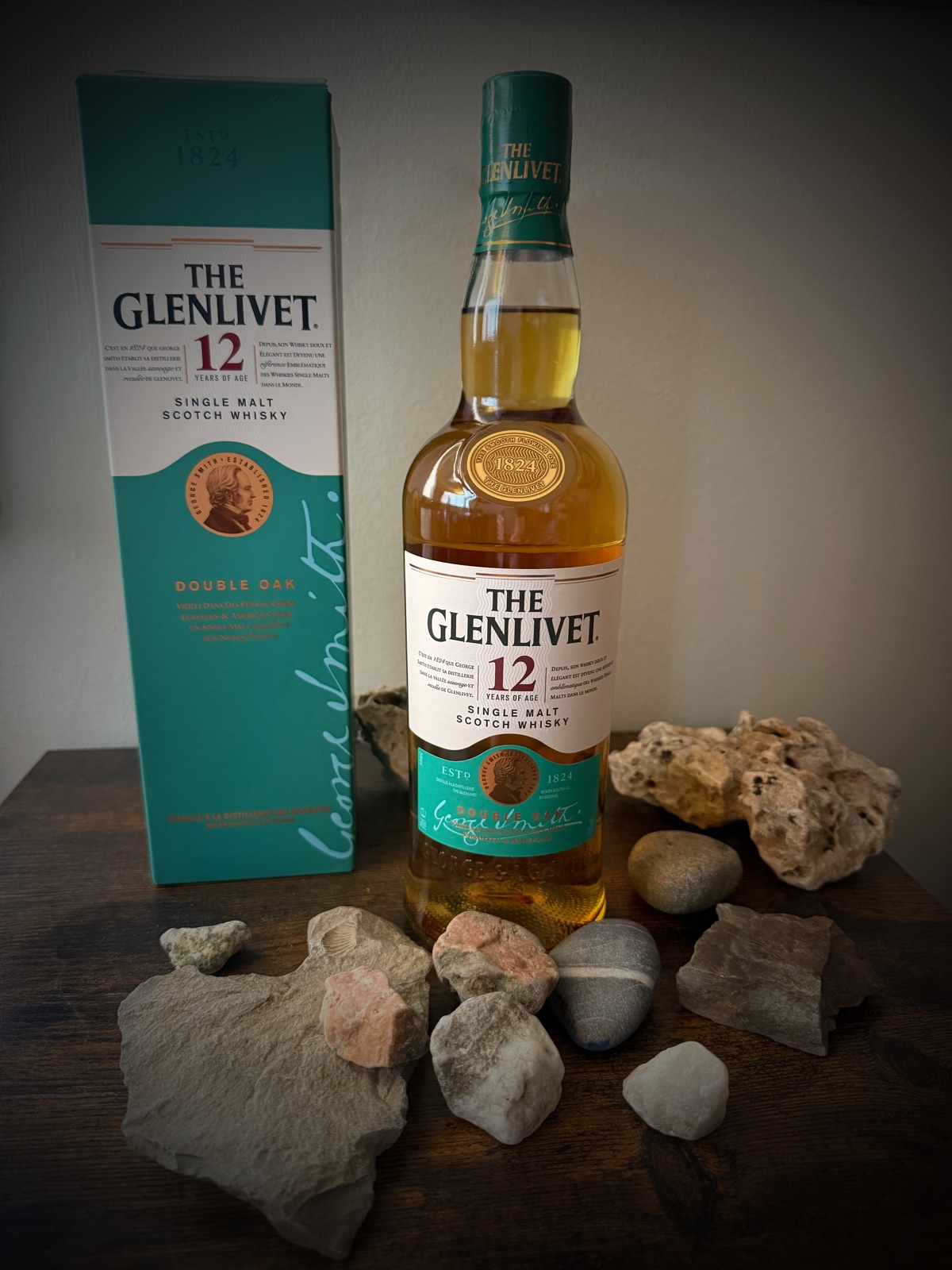
Fame normally gives a whisky some room on price. A reputable name, a story worth retelling, a label people recognise across a bar: all can turn a decent whisky into an expensive one. Much of what this column does is measure the size of that premium.
By that logic, The Glenlivet 12 should be one of the most marked-up bottles on the shelf.
The Glenlivet is probably the most recognised name in Speyside. Depending on the year, it is either the first- or second-best-selling single malt in the world, a position it has traded with Glenfiddich for decades. It is in the duty-free shop, on the supermarket shelf and behind almost every hotel bar. It has very probably introduced more people to single malt Scotch than any other whisky.
Yet the premium is barely there.
Start with the whisky itself. Whiskybase gives The Glenlivet 12 a score of 80.47 out of 100 from 575 ratings. The score is modest, but the sample is unusually large, especially compared with most other Glenlivet expressions. On our five-point scale, it translates to 4.02.
Our relative-value model, which compares it with twelve-year-old Speysides of similar standing, considers The Glenlivet 12 substantially underpriced. Our second model approaches the question from the opposite direction. It ignores comparable bottles and builds an intrinsic value from production, maturation, cask, bottling and reputation. That model lands almost exactly on the typical retail price.
Two different methods therefore tell essentially the same story. The Glenlivet 12 is not expensive for what it is. More surprisingly, one of the most famous names in Scotch appears to add very little to the price.
The reason may be the same thing that makes the bottle seem rather unglamorous: you can find it everywhere.
Brand premiums thrive on some degree of scarcity. Allocations, limited editions, annual releases and waiting lists make bottles harder to obtain, and scarcity gives ownership a little more meaning.
The Glenlivet 12 works in exactly the opposite way. Pernod Ricard sells it on an enormous scale, and the commercial promise of the bottle is that it will always be there, in almost every market, at a broadly predictable price. Scarcity would undermine the very thing the product is designed to do.
It is difficult to charge a premium for a whisky nobody ever has to look for.
Ubiquity is the discount.
Retail prices reinforce the point. The same bottle can move from genuine bargain territory in supermarkets to noticeably more expensive territory at specialist retailers. Nothing about the whisky has changed. There is no rare cask, allocation or shortage to explain the difference. Much of the variation simply comes from the distribution channel.
None of this makes The Glenlivet 12 a great whisky, and that distinction matters.
Among the 274 bottles in our dataset carrying aggregated critical scores, The Glenlivet 12 scores 76.9. Glenfiddich 12 sits almost exactly beside it at 77.1. Two rivals have spent a century and a great deal of money persuading drinkers that they represent different things, yet in our data they are statistically almost indistinguishable.
Move a little further up the quality scale and the picture changes quickly. Glenfarclas 12 scores 84.5 and generally costs only moderately more. A relatively small increase in price buys a fairly substantial increase in critical appreciation.
So the claim needs to remain precise. The Glenlivet 12 is not necessarily the best whisky to buy. It is a whisky being sold at a remarkably fair price. Those are different propositions.
There is a nice historical irony in all of this.
After George Smith obtained the first licence in the parish in 1824, the Glenlivet name became so commercially valuable that distilleries nowhere near the glen began attaching it to their own: Macallan-Glenlivet, Aberlour-Glenlivet and many others. The practice became so widespread that legal action eventually led, in 1884, to the original distillery securing the right to call itself The Glenlivet. Our own index still contains one of those historical fossils, a Macallan-Glenlivet 15 distilled in 1958.
The Glenlivet name was valuable enough to borrow a hundred and forty years ago.
What the numbers suggest today is rather different. At least on its twelve-year-old, the company barely appears to charge for that name at all.
The distillery whose name once became so valuable that half of Speyside wanted to borrow it now sells its most famous bottle largely on the value of what is inside.